
Guest post from Tallis 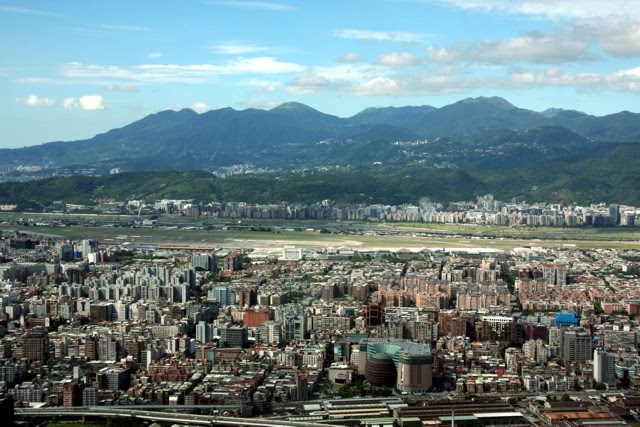
If you were to ask a volcano enthusiast “What is the most dangerous volcano on the planet?” you’d get a range of answers. From a novice, Yellowstone, from someone who only knows of American calderas, the Long Valley caldera. The generic but not wrong, Vesuvius, Mt Rainier, Campi flegrei, Paektu, Santorini, Nevado del Ruiz, and more. Many candidates for this title exist to the point where I believe unless either of these volcanoes is actually likely to produce a major eruption soon, no one can truly say conclusively what is the most dangerous volcano.
I am sure all of us have our personal picks backed by facts and reasonable propositions and I am sure we all have that one volcano that we wished was more studied by the scientific community and had plenty of data to pick apart and analyze. I am letting Chiles-Cerro Negro go so don’t worry it is not the subject of this article. I have passed over another volcano that has been restless as of late and has a large magma chamber. In hindsight, I should have done this article a long time ago.
I am sure a decent bunch of us are anticipating the next volcanic catastrophe; while there is no guarantee, it is possible that we could see large sulfate expelling eruption in the near future. Statistically, it is not very unlikely nor would it come as a big surprise.
Humans have suffered the power of volcanoes since our emergence into the world, It is unfortunate that many people do not respect the power of a volcano. People don’t truly understand a true volcanic catastrophe, No man-made weapon has ever matched even the modest VEI 6 let alone VEI 7 or 8. No densely populated area has been threatened by a VEI 7 and we have never seen a massive caldera-forming eruption with our modern technology.
We would like to believe once the signs that it could happen appear, people would spring into action and the government with civilians would prepare to the best of their ability. As much as I would like to believe that, history has shown us that this is not always true. Not just with volcanoes but with Tornadoes and Pandemics Even when the writing is on the wall, a lot of people won’t respect disaster until it affects them and by then it is too late to prepare.
The volcanic event that we are anticipating will not be respected by everyone and depending on how it goes, it might not be prepared for. There are a significant amount of volcanoes that threaten millions of people and are monitored closely. An argument could be made that the volcanoes of East Africa, the Philippines, Japan, Central, and South america, the Mediterranean, or Indonesia are the most dangerous as there are a great deal of volcanoes in those areas that threaten large urban areas. But in my opinion, what I believe to be the most dangerous volcano in the world is the Tatun Volcanic Group.
I have only given this volcano the briefest of introductions in one of my first articles, I will give a more deserving introduction into this volcano here.
The Background
Located in the northwestern part of the densely populated island of Taiwan, the volcano looks unimpressive compared to others. After all, it is ‘just’ a group of lava domes, Tuff rings, and cones. Barring a small eruption in 2014, it hasn’t erupted in over 1300 years. It’s first eruptions can be traced back 2.8- 2.5 MA ago. The second period began 1.3 Ma ago and ended 100,000 years ago. Most of the domes and rings were constructed 0.4-0.8 Ma ago. There have been some eruptions confirmed by the GVP to have happened 648 CE and 4095 BC but the scientific papers I have looked at don’t mention those.
The domes are dominantly Andesite and Basaltic Andesite, with some pure Basalt as well. The group consists of 20 major domes and cones. It was mostly built by effusive eruptions and there has only been one Plinian eruption known to have happened at this complex. Most of the pyroclastic material has been produced by Vulcanian and Pelean eruptions.
The geological setup that has produced this volcano is complex and has not been settled, it has access to very deep and volatile magma and an extensive plumbing system consisting of a magma chamber and a large hydrothermal system. It is on the Western edge on the subduction zone as the Philippine plate goes under the Eurasian plate.
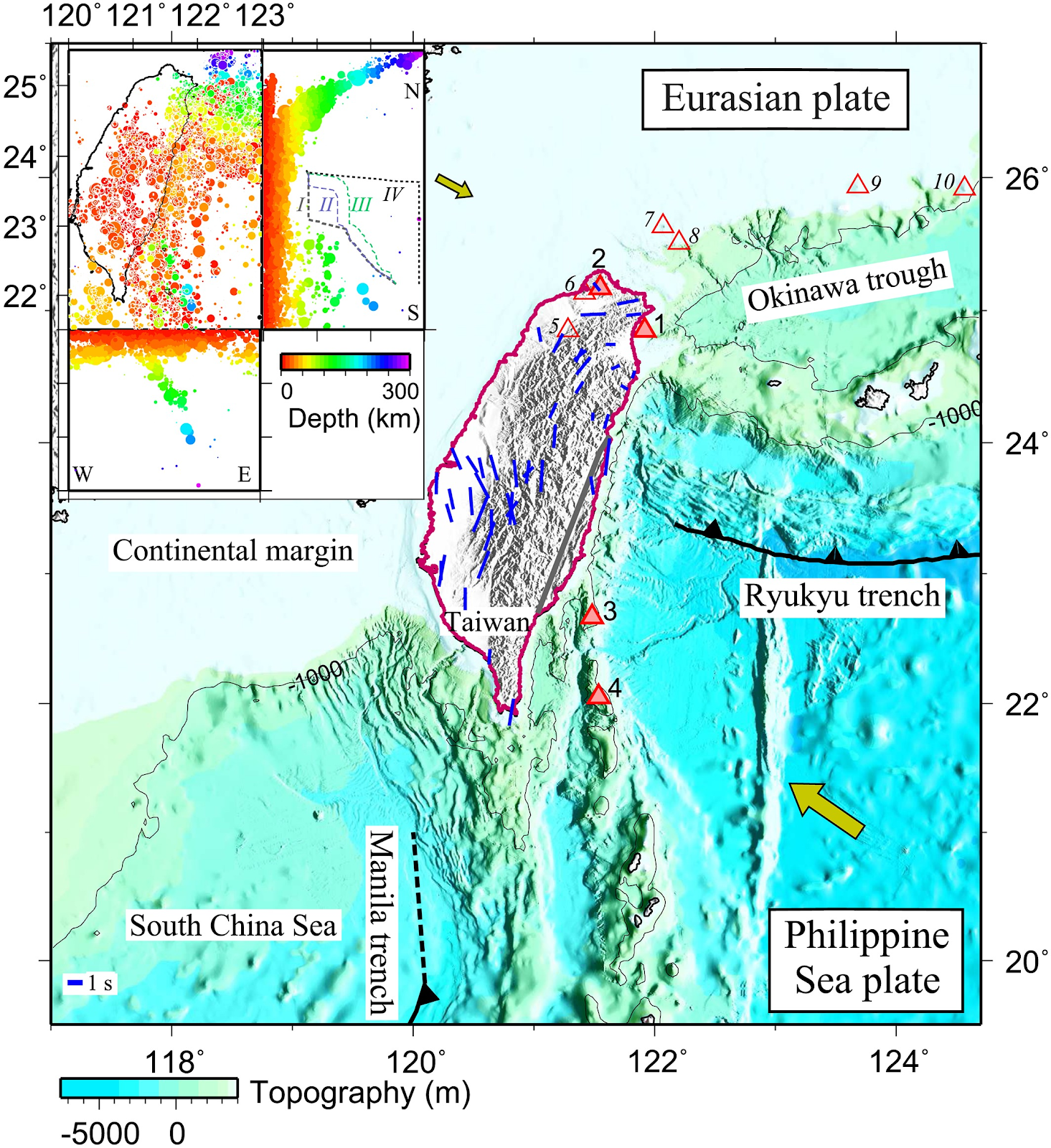
However the subducted area is deeper than the usual 100 km. This volcano has been associated with the volcanic arc related with this subduction zone but isotope analysis has shown that it has no arc signature but the magma is like that of continental rift but there is no rift here. It has been propositioned that this volcano is fed by a lateral leak of the mantle fluid from the Philippine plate but this hasn’t been confirmed.
Despite a surplus of signs such as hot spring, fumaroles, sulfate deposits, uplift, and seismic activity. There are still some who would consider this system extinct but this system is almost definitely active. The hydrothermal system is large and it’s chamber lies 0.5-2.5 km below the surface. It has been shown that this chamber is being currently supplied with material from the mantle, however, if this volcano is regularly fed by fluid from the mantle this might not be an anomaly but the norm.
One important portion of this volcano has not been well studied and that would be regional tectonics. Unfortunately, I could not find a great deal information on regional faults at all and the state of regional faults would play a valuable role in understanding the volcano’s unrest. Not only in the sense of caldera-forming events or even regular eruptions but also the state of the hydrothermal system. Even if this volcano were not to produce any type of eruption, the unrest could produce a shallow magnitude 6+earthquake in a densely populated region.
The volcano’s magma chamber is massive, more massive than most people would think. In 2017, an extensive study was done to find the size of the magma chamber, and while it didn’t give an exact number, it gave us a rough estimation. Dr Lin, one of the researchers conducting the study, estimated that the area of the chamber was ¼ the size of New Taipei city with a depth of 4 to 10 km. I don’t know if he means a quarter of the city proper or municipality but calculating the volume of all the known potential variables yields 1,140 km3 2,052 km3 2,850 km3 and finally 5,130 km3, a HUGE spread in numbers
That’s what he gave in a Taiwannews article but his Study gives something different. In his study he estimates, if the chamber is 40% molten the volume would be 350 km3, and if the chamber is 14% molten, it’s volume could be 936 km3. Not as massive as what I calculated using the information in the article. Both sources state that another study shall be made soon so you will have until for a more precise figure. This mystery is, in my opinion, without a doubt one of the greatest and most interesting in this field. My anticipation is almost pouring out of my mouth.
Thankfully you won’t have to wait too long as that study was released a few months ago and has given the chamber up to 504 km3 of melt which would be 16.5% of the total chamber. Giving the chamber a total volume of 3,048 cubic km. While this figure is not super concrete it is much better than whatever was going on above. It should be known that this figure is the maximum volume based on the information based on the study but this still shows a lot of magma lies beneath this system; enough to trigger a high-end VEI 7 or even a low-end VEI 8. Whether the volcano could actually produce a caldera-forming eruption in the near future is a different issue.
The Threat
So many people live close to this volcano, more than a million people are less than 5 km away from this volcano and almost 10,000,000 live within 100 km of this system. Even a more modest eruption could threaten a quarter of the entire country’s population.
This volcano is dangerous and I am sure no one would object to that statement, this background hosts a laundry list of threats. All of which I will break down now but the geological setup, as well as the plumbing to the system, are not clearly defined or even understood. This complex produces almost every type of eruption known, various types of lava flows, Vulcanian eruptions, Pelean eruptions, Plinian eruptions, submarine eruptions, and probably has the potential to produce a caldera-forming eruption.
The most likely event to take place in this system is a small hydrothermal explosion or phreatic eruption, in fact, this has already happened. This volcano had a small phreatic eruption in 2014 that was only recognized after an analysis of seismic data. Even a small eruption or explosion like this could kill people. The death toll likely wouldn’t surpass 50 and it would definitely not be a regional or global catastrophe but that doesn’t matter. An eruption like this would be almost unpredictable and could realistically happen at any time but it would have to take place in a specific place in order to be deadly. There is nothing much to this eruption and there is nothing much to be done to prepare for this.
A deadlier and still reasonably likely event would be a large hydrothermal explosion, phreatic eruption, or small Vulcanian eruption akin to the recent eruption of White Island.
This and the previous style of eruption would only be deadly if it were to hit a populated area within the complex proper and be limited to local impacts. This should not be a huge issue for this volcano.
Fortunately and unfortunately, There would be some warning but that warning may not be enough to generate the appropriate response. There was a decent bit of seismic activity that took place at White Island before it’s eruption along with other signs but the restlessness was par for the course for a volcano like this. The government and tourist agency didn’t stop it’s routine and 21 lives were lost.
This situation was an avoidable tragedy and will not be the last of its kind. A situation similar to this could happen at Tatun. This volcano is constantly restless and has people still questioning whether it is alive or not when it is almost definitely alive and kicking. If this eruption were to happen within the city proper, only the best monitoring and planning would evade death, a difficult feat even for the best.
One way that can give more data and some insight into this possibility is to study the plumbing and dynamics of the hydrothermal chamber. A potentially important part of this would be the aforementioned regional tectonics. The hydrothermal chamber is often mentioned as a side note to the magma chamber, and generally only receives modest attention as it doesn’t threaten a large number of people. This is not the case here, not only is this hydrothermal system large, it might have highly volatile material from the mantle.
A Vulcanian eruption would produce similar issues. The predictability would probably go up as the eruption would get larger, however, this doesn’t have to be the case. This volcano doesn’t have what would call a well-grasped history and it’s existence seems to be special. It’s magmatic eruptions could be very predictable or very unpredictable. But after 1 deadly explosion, there would be mass evacuations and prep almost immediately after. These eruptions wouldn’t be extremely dangerous for normal volcanoes but this isn’t a normal volcano. The inherent difficulty of giving an accurate volcanic forecast is maximized with the nature of these eruptions. They would not be extremely deadly like Nevado del Ruiz or Pelee but relative to their size they could be some of the costliest and deadliest eruptions of their kind.
Lava flows have taken place from this system, and they have been relatively voluminous. The average effusive lava eruption would release 0.1 to 0.6 km3 of magma. It wouldn’t be very deadly due to the amazingly slow speed of the flow and it would most likely be more intermediate then mafic. However, it is possible that this volcano, tapping into its rich and volatile magma, could produce a lava eruption on the scale of the recent eruption from Hawaii. The chamber has the volume but does it have the high-quality magma?
According to the aforementioned recent chamber study, 2.2% of the magma is basaltic while the rest is intermediate. That is 60 km3 of available basaltic melt, not only that but an intrusion would likely add to the available magma. Lava flows are common at this volcano but nothing on this scale has been confirmed. It seems to be a possibility and it would be a sight to see an eruption like that at a volcano like this. Even with this volcano, an eruption like this would not be very deadly and it would be one of the best-case scenarios.
Lava dome construction and destruction is very common at this complex which would lead to Pelean eruptions and voluminous pyroclastic flows. These eruptions usually contain 0.4-0.8 km3 of material but eruptions could be smaller or bigger. There is no complexity to this process, it’s simple enough, the lava dome is built, the lava dome collapses, a pyroclastic flow. The eruption’s death toll would depend on preparations and the size of the eruption.
A quick collapse of a small lava dome would not be very deadly with the right preparations. However with the small size stature of the dome could lead to the underestimation of the situation resulting in death. A major disruption to an economically vital city for a benign-looking eruption may not be something the government would be willing to risk.
Another scenario with even more foreboding potential would be a long multi-year construction of a dome. Only after several years after it’s birth would it collapse. One of the deadliest parts of this type of eruption is the fact that no one would know when the dome will collapse. If the collapse happens quickly then the adequate preparations might not be made and if it takes place after a long time then preparations would be relaxed.
A pyroclastic flow from a large Pelean eruption could travel over 15 km and destroy all life within its path. If this situation were to be poorly prepared for, tens of thousands or maybe even hundreds of thousands will die.
The final and most destructive eruption that could take place would be a Plinian eruption without any doubt. This system has produced large VEI 4 Plinian eruptions in the past and if this were to happen, the preceding eruptions would give ample warning, and the most likely cause for death would be from the ashfall. There hasn’t been any VEI 6+ eruptions confirmed to have happened in this complex but it’s not impossible for it to happen now. This system has more than enough volume to produce a large caldera-forming eruption but does it have the quality magma? Well since Masaya produced a caldera-forming eruption with mafic magma, I’d say maybe. That doesn’t mean that it is likely per se. The Intermediate magma is partly a result of the very hot magma melting the rocks surrounding the magma chamber. It is possible that some silicic magma could get in the chamber but not a large volume at the current period so I don’t really think that should be the dominant concern. It is possible though. It is actually amazing that this volcano’s products can remain so youthful despite this volcano being around 3 million years old. There is no point in discussing the effects of a large VEI 7+ eruption as it would cripple the entire country and lead to a Hollywood-esque disaster with horrific destruction and death.
The Present
Such a wide range of possibilities from an incredible effusive eruption to a devastating explosive eruption, the current situation should speak to which one seems likely. Unfortunately, there is no public data for this system, but according to most studies on Tatun, the current activity points to a hydrothermal origin. Some material from the Magma chamber is entering the hydrothermal system but that doesn’t mean that the magma chamber itself is under intrusion and the deformation in the area has been associated with the hydrothermal system.
In such a large complex, any eruption could happen anywhere but it wouldn’t happen everywhere.
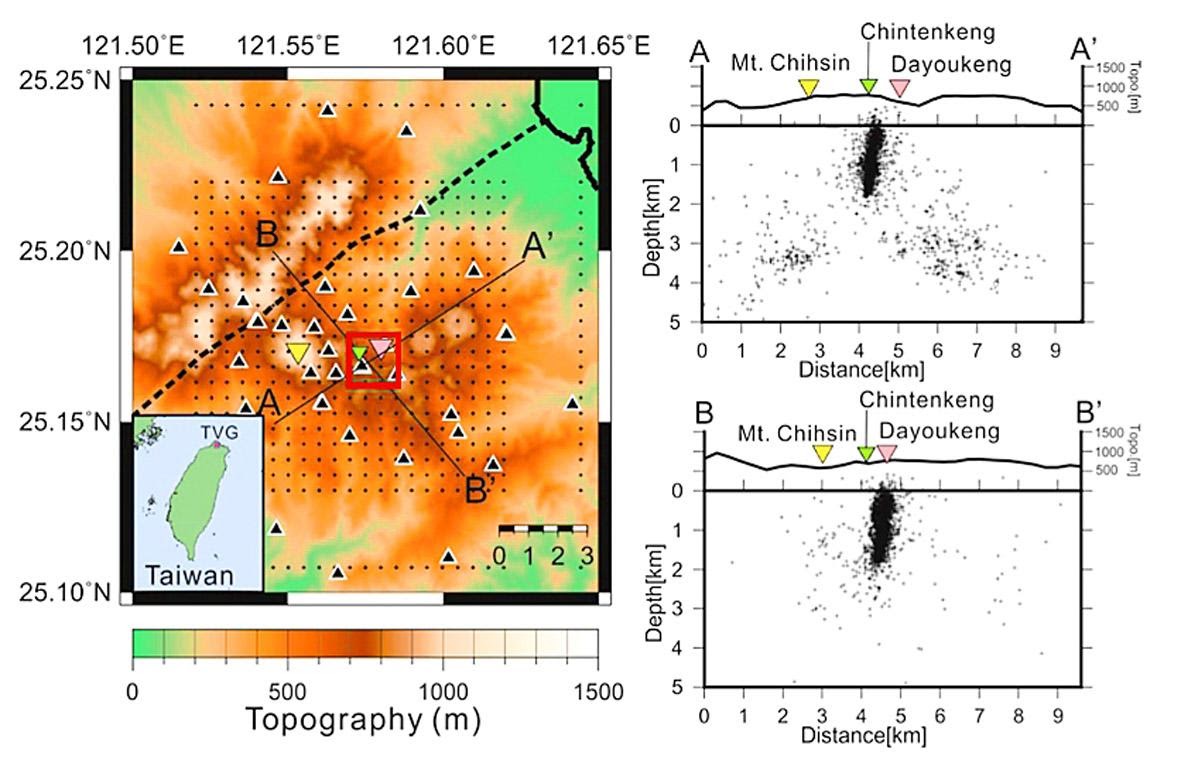
A volcanic vent has formed at this volcano giving a surplus of evidence of life at this volcano. The vent extends down 2 km, exactly where the hydrothermal chamber would be. There is no definite proof of magma intrusion but a surplus of hydrothermal activity. At this point, a magmatic eruption doesn’t seem likely but a hydrothermal explosion can be just as deadly.
Currently, an alert system is being created by the government of Taiwan, as thanks to Dr Lin’s extensive studies on this volcano leaves little doubt to its potential.
This is an interesting volcano, to say the least, but what makes it the most dangerous? In my opinion, the volcano doesn’t have to produce a large Plinian or Pelean eruption to be deadly all it takes is a tiny, poorly placed phreatic eruption to cause fatalities. There is no shortage of people living in the volcano. A seismic crisis on par with Mt Agung recently could cause panic and lead to significant economic disruption to the city.
Just on it’s on it is already dangerous but another variable that makes this volcano even more threatening. There are not one but two nuclear power plants near the volcano. Needless to say a volcanic Fukushima, Chernobyl, or worse would be absolutely horrible but it is possible here. I don’t know much about nuclear meltdowns so I’ll save that issue for later.
Tatun volcano group has been seen as dead for years but it’s more alive and expansive than most volcanoes. Regardless if you agree with my opinion on this volcano, scientists and government officials should no longer consider this volcano extinct and take it just as seriously as Campi Flegrei or any other widely known dangerous volcano. (And give me us some public data)
Tallis
2020 paper on Tatun

