
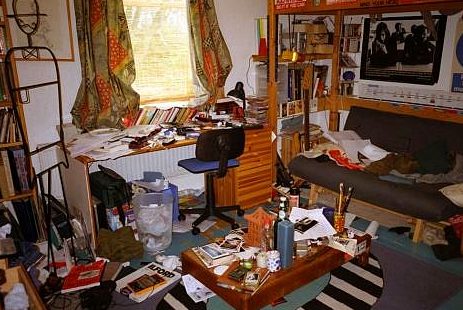
 People who are struggling with the burden of too much stuff occupying their living space, may be feeling really bad about it. We are surrounded by a lot of expectation and judgement about tidiness but little education or support.
So here – as a way of compassionate acknowledgement – is my overview of the 5 most common ways we get in trouble with too many belongings choking our living spaces.
The short version
The most typical ways we get in trouble with overwhelming volume of belongings are these five.
1. Some people haven’t been able to move into their home space completely. They have only “one leg in” emotionally.
2. Some people gather sentimental objects and don’t know how to prune them without loosing connection with the loved ones, even if it burdens their living space.
3. Some people have bitten more than they can chew with their premises or their job and overwhelmed, they have no energy left to tend their living space.
4. Some people live with unresolved trauma (and/or learning disabilities) which affects good judgement and capacity for action, e.g fearing not enoughness even when surrounded by too many belongings.
5. Most people are oppressed by some belongings they don’t need, use or like, because we lack basic education about letting go as part of healthy life. And, we are bombarded by messages about good life coming from getting more stuff.
Longer version
Re 1 above. Some people haven’t been able to claim the space they live in as theirs to be at home in even though they are paying mortgage or rent for it.
For example they live with their belongings not completely unpacked and homed, which makes it hard to keep things tidy and to find what you need.
In a stewarded space, “one stitch in time, saves nine” but where you don’t feel at home, the space gets in trouble and stays in trouble very easily.
For example.
For my grandparents, it was because they were moved to houses that previously belonged to German families (when Polish boarders were moved after the war) and they dreaded being uprooted overnight again. Even though decades passed, the largely unconscious fear (war trauma) was there.
For a client of mine, she didn’t want to make herself at home in a temporary new home for her and her son, after the boy’s father left. So they lived out of boxes and in chaos for a long time not because they had a “clutter problem” but because it was hard to want the new life.
For each of the above “reasons” for clutter, there are corresponding human stories, feelings and struggles.
Does it help to know why?
Having good reasons for ending up surrounded by clutter doesn’t mean good reasons to live with the burden of it forever.
But.
We can’t change things for the better without first acknowledging and mourning what’s going on now.
Some loosening of the prison walls happens when we allow ourselves to see and feel the situation.
I hope this article can validate and encourage those who need compassionate acknowledgement for their difficulties with clutter so they become freer to name and tend what’s needed NEXT.
If it’s a bit difficult to feel the sadness of what’s happened to your living space, what’s needed next may be support to allow yourself to see and feel where you are to start with.
If you’ve been able to tell and feel the truth of where you are now about it, then, the next steps would be about planning practical action and recruit helpers for that. You’ll want people who can both contribute elbow grease and moral support when your morale wavers.
But it will be worth it because peaceful and beautiful living space will hold you well and support everything else you do in life, for yourself and others.
May you be able to restore grace to your space easily.

