
Schools use a lot of energy, and much of the time this is unavoidable. Computers, smart boards, lighting, heating and air conditioning are all vital in today’s schools. However, there are plenty of simple ways to save energy at school, which we outline here.
These 10 creative ways to save energy at school balance practical managerial steps alongside ways in which students themselves can step up through awareness and education.
How to Save Energy in Schools
- Take Advantage of Natural Light
- Switch to Advanced Lighting
- Participate in Demand Response Programs
- Power Management
- Assign an Energy Monitor
- Invest in Energy Management Systems
- Electrify Your Fleet
- Go Solar!
- Update Your HVAC Systems
- Take Advantage of Competitive Energy Supply
1. Take Advantage of Natural Light
Many schools under construction or undergoing remodeling or rehabilitation are already exploring design features that maximize sunlight. Natural light allows for a more relaxed learning environment than harsh industrial lighting. Furthermore, studies have shown that natural light has a positive impact on students’ mood, concentration, and focus levels.
For times when the glare from sunlight beaming into classrooms is unwelcome, installing blinds or other window fixtures could be a solution. This gives teachers the power to trade electrical light for natural lighting when needed.
Going one step further, your school could start using light sensors. These relatively inexpensive units turn lights on and off in spaces that aren’t frequently used. They’ll trigger lighting when someone enters and automatically turn off when there’s no movement.
2. Switch to Advanced Lighting
Many schools have already made the move to LEDs, and that’s a great first step. However, lighting technology is advancing at break-neck speed. If your school has not upgraded the lighting in three years or more, there is probably an opportunity to become more energy-efficient and gain significant long-term savings on electricity bills. Upgraded lighting can be an expensive initial investment, but there are many incentives to offset or entirely cover the cost of lighting projects. And upgraded lighting may only use 20-25% of the energy of traditional lights and last around 15 to 25 times longer.
Lights throughout schools are in use most of the time. Therefore, if your school is looking to save on electricity, lighting fixtures are a good place to start.
3. Participate in Demand Response Programs
Demand Response involves reducing your energy use during certain times of peak demand on the electric grid, and it’s a way for your school to start saving on energy while also improving your budget.
Demand Response helps electric system operators take pressure off the electric grid when needed.The grid operator or a third party will send you an alert. If you are able to completely cut off or significantly reduce your energy, you will receive a payment. Usually there are no penalties, if you are not able to meet the request.
Here are a few examples of this in action:
- Shutting off the lights – as we mentioned above, this is a potential game-changer!
- Pre-cooling – In anticipation of a summer event, pre-cool the school and then turn down the HVAC during the event.
- Turn off or reduce the power consumption of other key equipment – For example, elevators, school kitchens, or pools.
By making just a few changes, you could successfully participate in these programs, save energy in your school, and actually add to your budget. Plus you will be helping the reliability of the electric grid.
4. Power Management
Power management can help you conserve energy in your school. It can be as simple as encouraging students and teachers to unplug appliances when they’re not in use.
Another easy step is to ensure all of your computers and monitors are on time managers. This means that they both go into sleep mode at the end of the day. Considering how many computers your school probably has, it could make a huge difference toward energy bill savings. Cycling your HVAC systems, to keep the condensers from constantly running, is another way to lower energy use and cost.
5. Assign an Energy Monitor
This is a more creative way to save energy at school.
Instead of assigning a hall monitor, how about assigning an energy monitor?
Involve students and allow them to share their ideas on energy conservation. Then assign a group of students representing each grade to monitor the energy usage. Moreover, you could start creating energy conservation projects for your students, including it into your school’s curriculum. And making students more aware of energy usage will have long-lasting benefits far beyond the walls of the school.
6. Invest in Energy Management Systems
By installing energy management systems, such as a thermostat controller and timer, your school will have greater control over your building’s heating and cooling outputs.
With manual controls, it’s hard to be accurate with timing and efficiency. This leads to a higher chance of energy waste in rooms that are not in use during certain days or times of the day. The simple start of controlling the timing can eliminate the chances of this happening. More sophisticated energy management systems can manage far more than just thermostats. They can control and optimize all of the equipment in your school.
7. Electrify Your Fleet
Electrifying your fleet not only reduces your school’s energy consumption, it lowers carbon emissions. It can save money and demonstrate your school’s commitment to sustainability.
An electric fleet will save your school significant money on fuel, and while electric vehicles may be more expensive to purchase, they are much cheaper to maintain and operate over time. In addition, your school’s commitment to clean energy is on display for potential and existing parents and students. Similar to having student energy monitors and energy in your curriculum, this is another way to lead by example in your local community.
8. Go Solar!
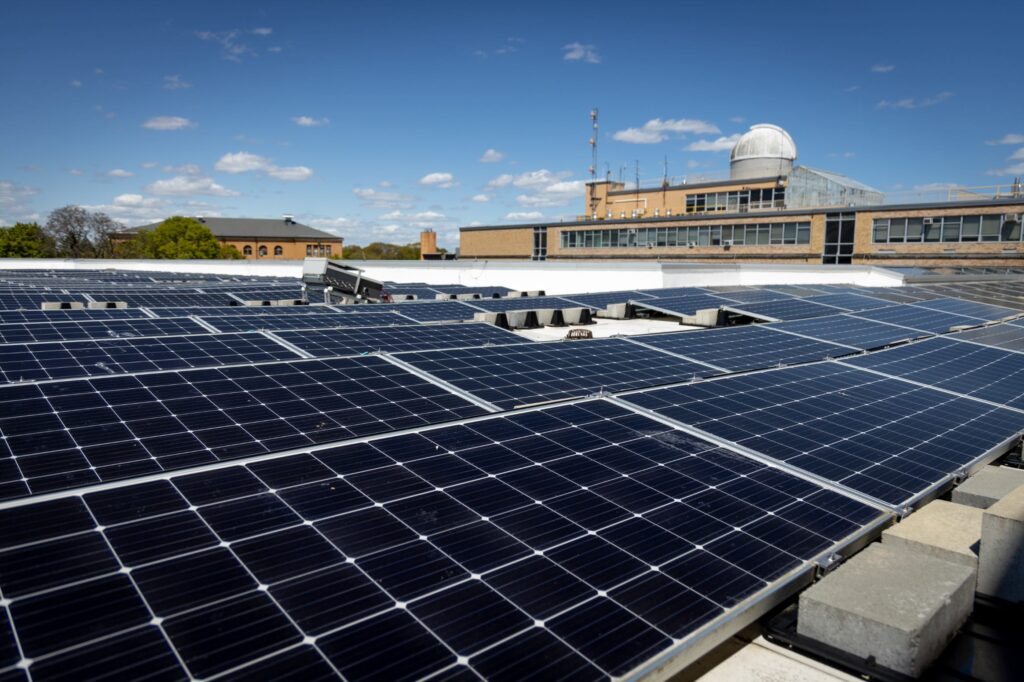
A lot of schools are deterred by switching to solar energy as construction can seem expensive and complicated. However, instead of owning the solar array, many schools obtain their solar power through a PPA.
Under a PPA, the solar developer pays for the construction, installation and maintenance of the solar array. The school then buys the electrical output generated at a lower per-kWh rate than they would from an energy provider. The cheaper pricing is in part due to the tax incentives that are monetized for the school under a PPA structure. Many schools are achieving substantial savings with a solar PPA.
9. Update Your HVAC Systems
Again, this may seem like a large financial outlay. However, the benefits can be substantial. And with the COVID-19 pandemic, HVAC and air handling upgrades may become necessary.
Replacing your old and inefficient heating, ventilation, and air conditioning (HVAC) systems with modern and efficient HVAC alternatives will reduce your current maintenance costs and lower your long-term energy usage and costs. It also provides a more comfortable and safer environment for learning.
Considering the amount of energy schools use on HVAC, this is a great long term method for saving energy. Moreover, utilities often offer incentives to reduce the cost of these upgrades.
10. Take Advantage of Competitive Energy Supply
If you are in one of the 36 states that have competitive energy markets, you should take advantage and look at the different options available to you for energy supply.
Competitive prices present significant energy savings to schools and also give them protections against unexpected costs. This is particularly useful for schools looking to manage their budget and cash flows long term, to avoid the fluctuation of utility rates.
When evaluating competitive supply options, it’s important to fully understand the contract, to ensure that you don’t encounter unexpected added costs.
Closing Out: How Schools Can Save Energy
We hope that these steps provide useful ways for your school to conserve energy and save money. With a little bit of creativity and some early managerial intervention, it’s easy (and possible) to start saving immediately.
PowerOptions is the largest energy procurement consultant for schools based in Massachusetts, Connecticut or Rhode Island. Contact us to explore how we can help your school implement energy solutions, develop a comprehensive strategy, and start saving on your energy bills.

