
The Haloform Reaction
- When a methyl ketone is treated with base and a halogen (e.g. I2, Br2, or Cl2) it is converted into a carboxylic acid, along with a haloform (HCX3)
- The reaction proceeds through three successive cycles of deprotonation and halogenation at the alpha carbon, followed by addition of base to the carbonyl and expulsion of CX3 as a leaving group.
- This is a rare example of an oxidation of a ketone to a carboxylic acid, which is possible because the (-)CX3 ion is a good leaving group and can be displaced by NaOH.
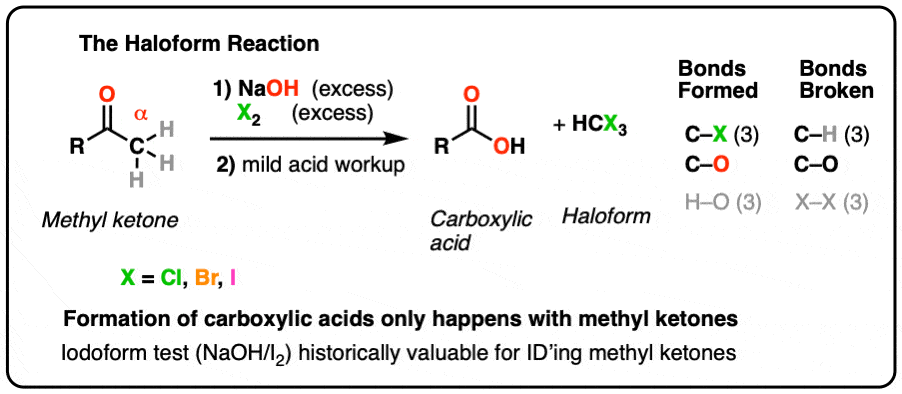
Table of Contents
- Ketones, “Alpha” Carbons, And What It Means To Be “Enolizable”
- Enolates Are Good Nucleophiles: Alpha-Chlorination
- The Haloform Reaction Has “Cookie Monster” Characteristics
- Two More Deprotonation / Chlorination Cycles Give A Trihalomethyl Ketone
- The Coup De Grace: Cleavage Of The Trihalomethyl Ketone With Strong Base
- Summary: The Haloform Reaction
- Notes
- Quiz Yourself!
- (Advanced) References and Further Reading
1. Ketones, “Alpha” Carbons, And What It Means To Be “Enolizable”
A ketone is a carbonyl group (C=O) flanked by two carbon atoms. The carbons directly bonded to the carbonyl carbon are referred to as the “alpha” carbons, those two bonds away are the “beta” carbons, those three bonds away are “gamma“, and so on. [Note 1 re: omega ω]
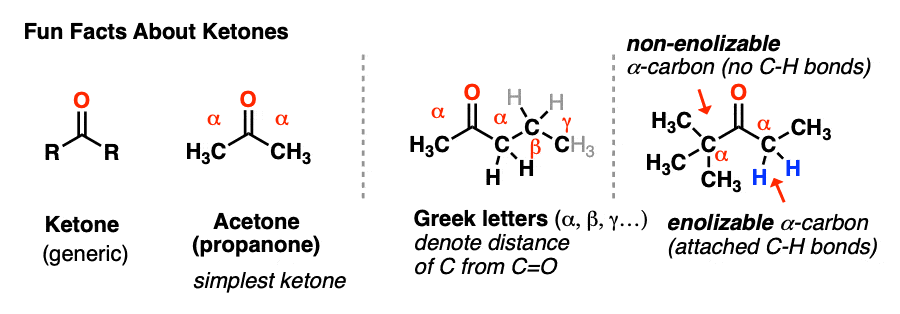
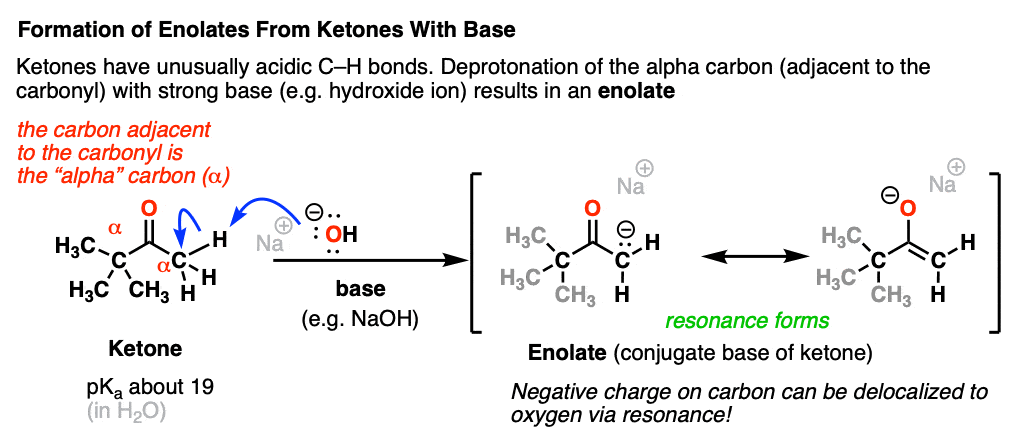
Ketones with C-H bonds on the alpha carbon are “enolizable”; not only is equilibrium with an enol tautomer possible, but strong base can deprotonate the alpha carbon to give its conjugate base, which we call an enolate.
The C-H bonds on the alpha carbons of ketones are unusually acidic (the pKa of the simplest ketone, 2-propanone, is about 19 in water [Note 2 for ref] a) because the negative charge resulting from deprotonation can be delocalized through resonance to the oxygen atom, which due to its higher electronegativity is superior at stabilizing negative charge.
2. Enolates Are Good Nucleophiles
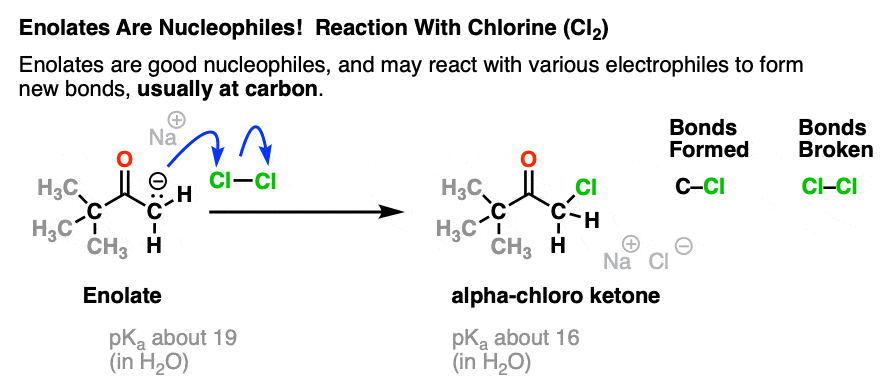
Enolates are good nucleophiles. Interestingly, although the negative charge is more stable on oxygen, enolates tend to react as nucleophiles on the carbon atom [Note 3 – but not always!] . That is, the alpha carbon tends to be where the bonds form. [It’s worth recalling Grossman’s “second-best” rule: the “second-best” resonance form is often the most important for reactivity purposes. This and other useful nuggets can be found in this book ].
Examples of enolates as nucleophiles abound, among them the Aldol and Claisen condensations, the alkylation of enolates, the Michael reaction and others.
Of relevance today is that an enolate in the presence of a halogen such as chlorine (Cl2) will give the “alpha-chloro” ketone, below.
3. The Haloform Reaction Has “Cookie Monster” Characteristics
In the days before our modern spectroscopic techniques, the iodoform test was widely used for the identification of methyl ketones. It’s still used in some undergraduate teaching laboratories because it is cheap and easily done: one merely stirs a ketone with iodine and base (NaOH), and a positive test quickly rewards the chemist with a smelly yellow precipitate. The stinky precipitate is iodoform.
The iodoform test is an example of the haloform reaction, which uses an excess of base (usually hydroxide) and an excess of halogen to produce a carboxylic acid and a haloform.
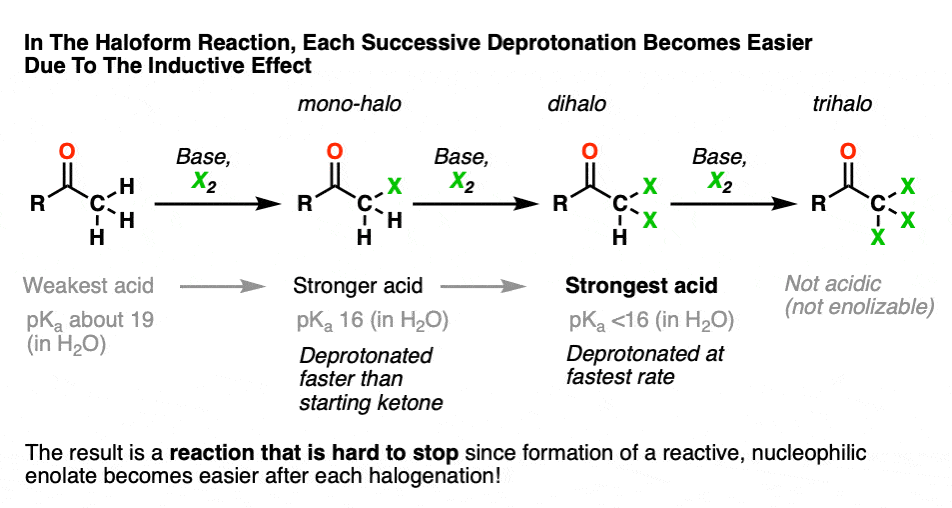
One thing that makes the haloform reaction interesting is that the first product – the alpha-halo ketone – is itself more acidic than the starting methyl ketone, which means it will out-compete the starting ketone for available base [Remember that one of the key factors that affect acidity is the presence of a nearby electron-withdrawing group, such as a halogen like Cl. ]
After halogenation of its enolate, the resulting dihalo ketone is in turn even more acidic than its two precursors (thanks to the two electron-withdrawing groups on the alpha carbon) which means it will out-compete these ketones for base.
Getting the reaction to stop at “just one” halogenation is a little bit like asking the Cookie Monster to eat “just one” cookie. The process continues until either the Cookie Monster is sated or all the cookies are consumed.
via GIPHY
[Two other examples of reactions with “Cookie Monster characteristics” are alkylation of amines, and addition of Grignards to esters]
The Cookie Monster isn’t done until all C-H bonds on the methyl group have been replaced with halogens!
Replacing all C-H bonds with C-Cl bonds results in a non-enolizable ketone which cannot be deprotonated further.
This is generally not what one would consider “carefully controlled”, especially considering the equilibria involved [Note 6].
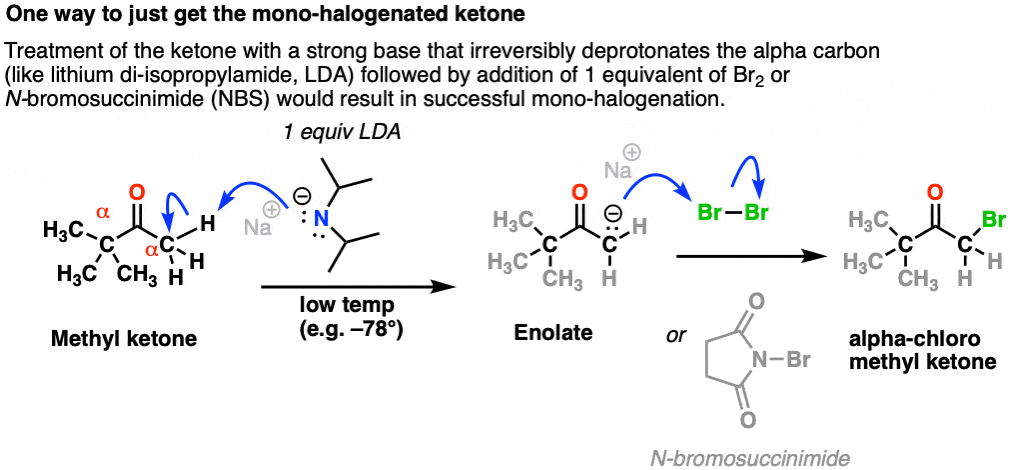
There are ways of getting alpha-halogenation reactions to stop at adding a single halogen atom, generally by adding a single equivalent of a strong base [e.g. lithium di-isopropylamide, LDA] to form the enolate followed by addition of an electrophilic halogen under carefully controlled conditions. [Note 5 for an example] But that’s not what we’re discussing here.
4. Two More Deprotonation / Chlorination Cycles Give A Trihalomethyl Ketone
Let’s walk through the rest of the mechanism in detail, starting with the alpha-chloro ketone above. Although we’re going to use Cl2 going forward, the reaction also works with Br2 and I2, as well as other sources of electrophilic halogens. [Note 4 ]
Under the conditions of the haloform reaction, three successive deprotonation-halogenation cycles occur in total, so that means that the alpha-chloro has two more cycles to go.
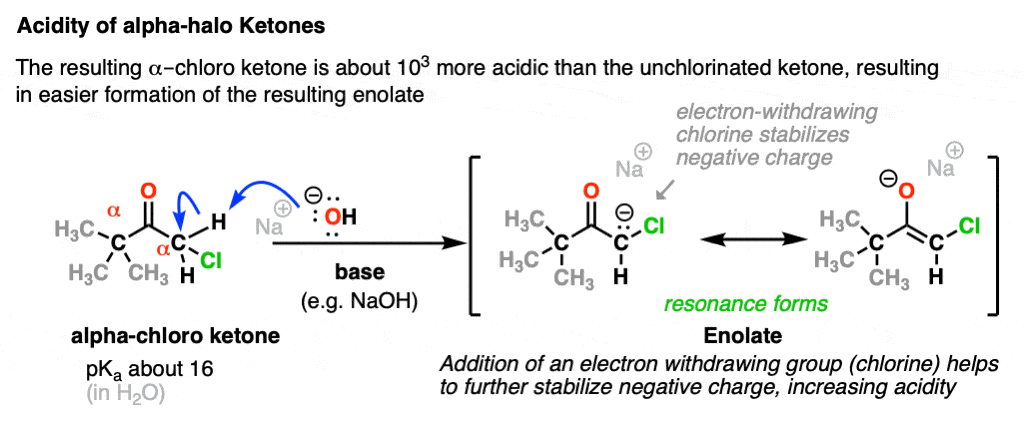
The alpha-chloro ketone formed from NaOH and Cl2 has been estimated to have a pKa of about 16 [Ref], making it 1000 times more acidic than the starting methyl ketone.
So in the presence of NaOH, this chloroketone will be easily deprotonated to give its resulting enolate:
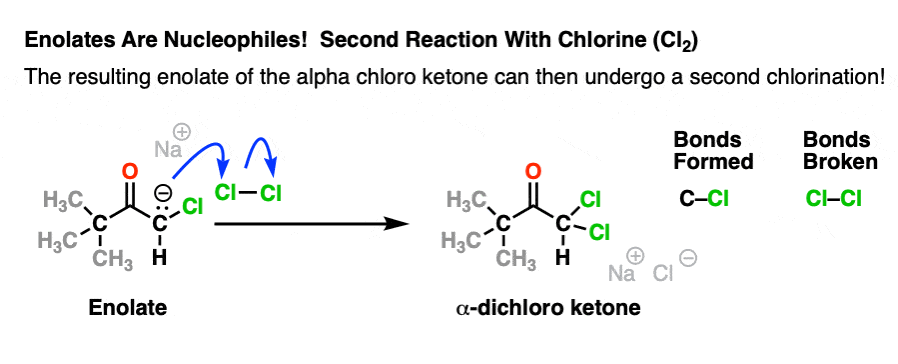
The enolate will then react with any Cl2 present, giving the alpha dichloroketone:
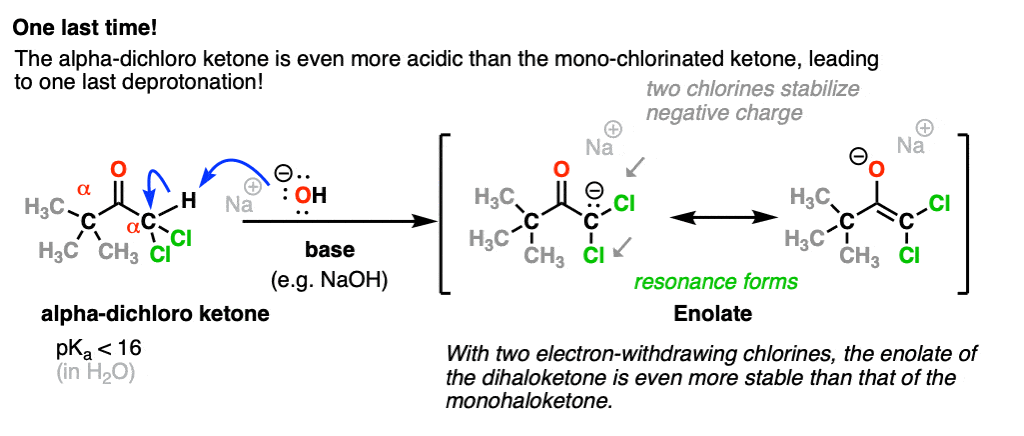
With two electron withdrawing chlorines, this ketone is even more acidic than the mono-chloro; [Note 7] . Deprotonation to give the enolate is even easier:
Finally, the third chlorination occurs:
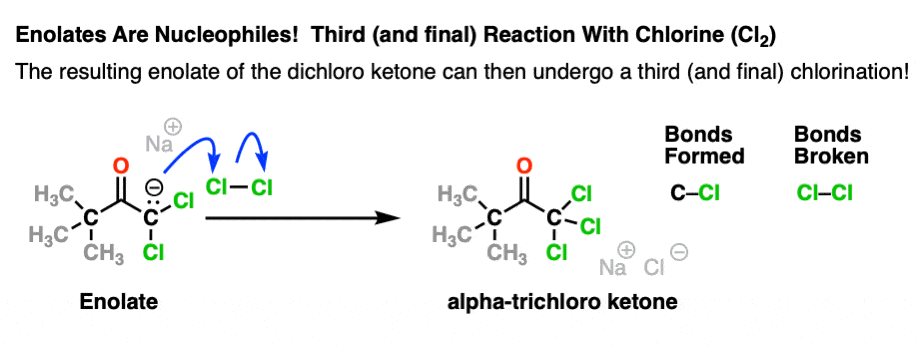
At this point, you might think the reaction is done. After all, there aren’t any more protons for base to remove, right?
5. The Coup De Grace: Cleavage Of The Trihalomethyl Ketone With Strong Base
Now comes the fun part. One final equivalent of base attacks the carbonyl carbon, giving a hydrate [or more specifically, the conjugate base of the hydrate].
Then comes the coup de grace. Normally, alkyl groups are extremely bad leaving groups since carbon is so poor at stabilizing negative charge [recall, leaving groups are weak bases – What Makes A Good Leaving Group]. However, since three hydrogens have been exchanged for three chlorines, this is no longer an ordinary alkyl carbon! This is a carbon attached to three electron-withdrawing atoms, which greatly stabilize any negative charge on the carbon. The result is that (-)CCl3 is actually a decent leaving group! [Note 8]
So in the final step, a new C-O pi bond is formed, and the C-C bond breaks, resulting in a carboxylic acid.
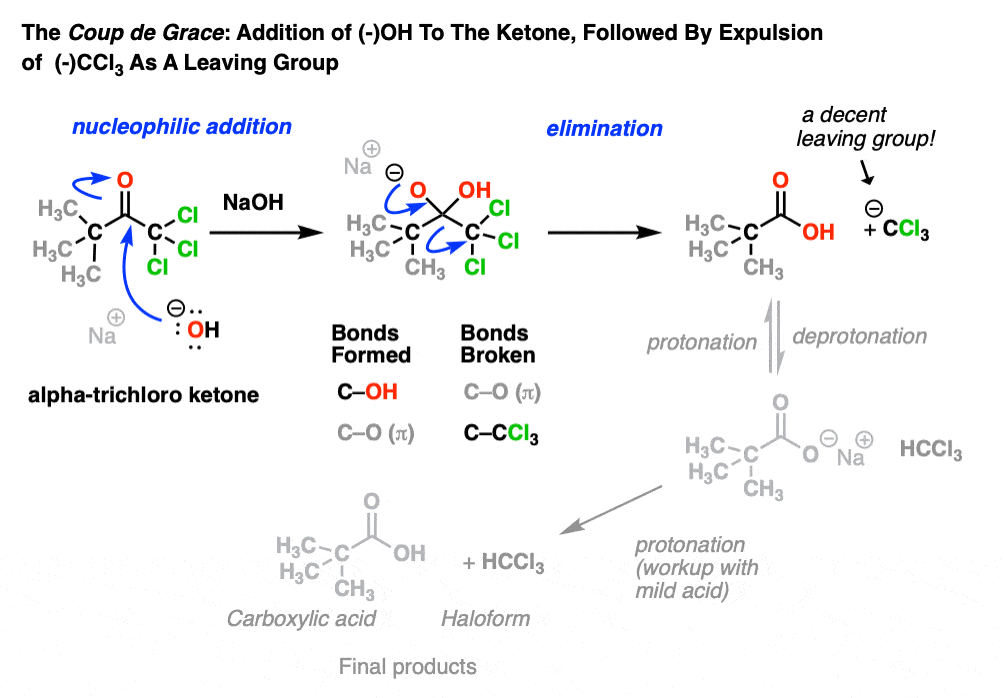
The final step is some bookkeeping. Since we have strong base present (NaOH) as well as the trihalomethyl anion, the resulting carboxylic acid (pKa of about 4) will be deprotonated by the strong base to give water. Once complete the reaction is quenched with mild acid, giving us the carboxylic acid product along with our haloform [chloroform in our case]
6. Summary: The Haloform Reaction
You may recall when learning about oxidation reactions that ketones are generally inert to oxidation whereas aldehydes are oxidized to carboxylic acids. The haloform reaction is a rare example of a net oxidation of a ketone to give a carboxylic acid. (Another example is the Baeyer-Villiger Oxidation which gives esters from ketones)
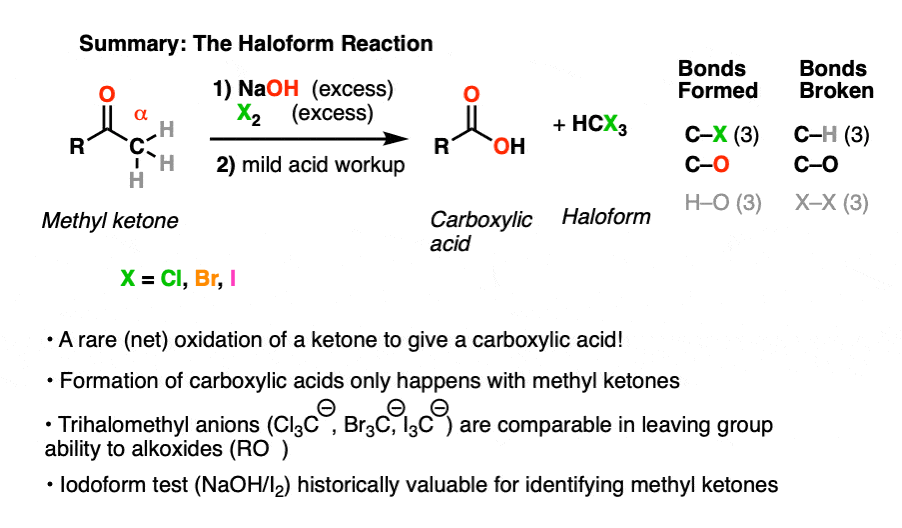
There are some limitations, however. For our purposes, the haloform reaction only work with methyl ketones.
Other alkyl ketones will undergo halogenation but not the cleavage to the carboxylic acid.
Notes
Note 1. Occasionally the term ω (omega) is used to refer to the terminal end of a chain.
Note 2. Source for this is Kresge, via Hans Reich’s page. https://pubs.acs.org/doi/10.1021/ar00170a005
Note 3. A discussion of C- vs. O- nucleophilicity of enolates is beyond what will be covered here at present. For the purposes of introductory organic chemistry, the enolate carbon will almost always be the nucleophile; one exception is the silylation of enolates (e.g. with TMSCl) which happens on oxygen; the O-Si bond is very strong.
Note 4. Although Cl2, Br2, and I2 are shown as electrophiles, in basic solution they are almost certainly present as their hypohalite salts NaOCl, NaOBr and NaOI
Note 5. A good way to do this would be with LDA (1 equivalent) followed by NBS or Br2:
Note 6. The equilibria in this reaction are extremely complex, and many details have been skipped over in the name of simplicity. Not only are there acid-base equilibria with the alpha carbon of the ketone, there are also equilibria between each of the ketones and their hydrates (and deprotonated hydrates). To make things even more fun, there are potential SN2 reactions between hydroxide ion and C-Cl bonds giving hydroxy ketones! This paper gives an accurate idea of the complexities involved.
Note 7. Unable to find a pKa here, but it is certainly less than 16.
Note 8. The pKa of chloroform has been estimated at 15.7 and 24, depending on the method (and, importantly, solvent). [See Ref 11] If you think of (-)CCl3 as being about as good a leaving group as (-)OCH2CH3, you won’t be far off.
Note 9. Thanks to Scott K. Silverman and Alex Speed for help in hunting down the pKa of chloroform.
Quiz Yourself!
Become a MOC member to see the clickable quiz with answers on the back.
Become a MOC member to see the clickable quiz with answers on the back.
Become a MOC member to see the clickable quiz with answers on the back.
Become a MOC member to see the clickable quiz with answers on the back.
Become a MOC member to see the clickable quiz with answers on the back.
(Advanced) References and Further Reading
- Ueber die Verbindungen, welche durch die Einwirkung des Chlors auf Alkohol, Aether, ölbildendes Gas und Essiggeist entstehen Justus Liebig Phys. Chem. 1832, 100 (2), 243-295 The Haloform reaction is one of the oldest reactions known – this paper dates back to 1832! Justus von Liebig reports the reaction of chloral (trichloroacetaldehyde) with Ca(OH)2 to form chloroform (CHCl3) and calcium formate.
- The Haloform Reaction. Reynold C. Fuson and Benton A. Bull Chemical Reviews 1934 15 (3), 275-309 DOI: 10.1021/cr60052a001 Early review and historical perspective on the haloform reaction.Several examples of haloform reactions, from Organic Syntheses, a collection of reliable methods for the preparation of organic compounds:
- β-NAPHTHOIC ACID M. S. Newman and H. L. Holmes
- β,β-DIMETHYLGLUTARIC ACID
Haloform-like reactions can occur on non-methyl ketones if another electron-withdrawing group is present to stabilize the negative charge on the leaving group!
- 3β-ACETOXYETIENIC ACID
- The chlorination of acetone: a complete kinetic analysis Peter Guthrie, John Cossar Canadian Journal of Chemistry, 1986, 64 (6): 1250-1266 DOI: 10.1139/v86-208 The equilibria of the haloform reaction with acetone is studied here in tremendous detail, including rate constants for many of the side-reactions such as hydrate formation. The pKa of chloroacetone is estimated at 15.74 ; no estimate for dichloroacetone is given.
- Mechanistic studies on the basic hydrolysis of 2,2,2-trichloro-1-arylethanones Cesar Zucco, Claudio F. Lima, Marcos C. Rezende, Jose F. Vianna, and Faruk NomeThe Journal of Organic Chemistry 1987 52 (24), 5356-5359 DOI: 1021/jo00233a009 A detailed study on the basic cleavage of 2,2,2-trichloro ketones, which is the second step of the haloform reaction.
- Alkaline cleavage of trihaloacetophenones Peter Guthrie, John Cossar Canadian Journal of Chemistry, 1990, 68 (9): 1640-1642 DOI: 10.1139/v90-255 This is an extension of the work in ref #3 above, studying tribromo and trifluoro ketones as well. What is interesting here is that despite what one might predict from electronegativity, the cleavage of trifluoroacetophenone is slower than that of trichloroacetophenone, which is slower than that of tribromoacetophenone (1: 2.1 x 10^6 : 2.6 x 10^8). The authors state that this follows from order found in the exchange rates of HCF3, HCCl3, and HCBr3. Also of interest is that the cleavage of the trifluoroaceophenone occurs through a hydrate dianion, while the trichloro and tribromoaceophenones likely cleave via a hydrate mono-anion.
- The Relative Rates of Formation of Carbanions by Haloforms Jack Hine, Norbert W. Burske, Mildred Hine, and Paul B. Langford Journal of the American Chemical Society 1957 79 (6), 1406-1412 DOI: 10.1021/ja01563a037 Surprise! The haloform reaction is faster with I2 and Br2 than it is with Cl2 (and sources of electrophilic F). “Alpha halogens facilitate carbanion formation in the order I ~ Br > Cl > F. The observed order is thought to be some combination of the inductive effect, polarizability, and d-orbital resonance.”
- Acidities of polyfluorinated hydrocarbons. II. Hexafluoropropanes, trifluoroethanes, and haloforms. Intermediate carbanion stability and geometry Kenneth J. Klabunde and Donald J. Burton Journal of the American Chemical Society 1972 94 (17), 5985-5990 DOI: 10.1021/ja00772a008 An estimate of the acidity of chloroform, at about 15.7 . Thanks to @sksilverman for the tip.
- Aryl trifluoromethyl ketone hydrates as precursors of carboxylic acids and esters Antonio Delgado, Jon ClardyTetrahedron Letters 1992, Volume 33 (20) Pages 2789-2790 DOI: 1016/S0040-4039(00)78858-7 This is a very interesting paper, as it shows that trifluoroacetophenone (which is cheap and readily available) can serve as a convenient source of CF3-. The authors don’t discuss it, but the CF3- could be trapped by other electrophiles and used for synthetic purposes.

