
For the first time since 1972, humans are returning to the moon this year. Tonight at 00:24 Dutch time, NASA is launching the Artemis II mission, with four astronauts on board who will fly around the moon. The Netherlands made a crucial contribution: the solar panels that power the Orion spacecraft.
Two large logos adorn the SLS moon rocket, which is in the spotlight at launch pad 39B of the Kennedy Space Center in Florida. At the top is the NASA logo, and below it that of the European Space Agency (ESA). For ESA member states built the European Service Module (ESM), which provides the Orion spacecraft with propulsion, fuel, and everything else four astronauts need to survive their long journey to the moon. A crucial component of the ESM – the solar panels – was developed and built by Airbus Netherlands in Leiden.
‘A proud moment for the Netherlands.’ This is how Daniël van Beekhuizen of the Netherlands Space Agency describes the upcoming launch of Artemis II. Van Beekhuizen represents the Netherlands on the ESA Programme Council that deals with manned spaceflight. ‘With the solar panels, the Netherlands is making a very tangible and visible contribution to this moon mission. The fact that Leiden-based Airbus was chosen within the collaboration between NASA and ESA underscores the confidence in the quality of our high-tech technology.’
‘A proud moment for the Netherlands. With the solar panels, the Netherlands is making a very tangible and visible contribution to this moon mission.’- Daniël van Beekhuizen, Netherlands Space Agency
Impressive wingspanThe four solar-powered ‘wings’ of the European Service Module are also large. Together, they contain a total of 15,000 solar cells, capable of generating 11.1 kilowatts of energy. Once the solar panels are deployed in low Earth orbit, they give the ESM its impressive wingspan of 19 meters. At the same time, they add only 255 kilograms to the total weight.
‘Humans have lived in space continuously for the past 25 years, aboard the International Space Station ISS. The next step is our return to the moon. ‘And not just for a short while, but to build a permanent presence,’ says Stefaan De Mey, Head of Strategy at the ESA Department of Human Spaceflight & Robotic Exploration.
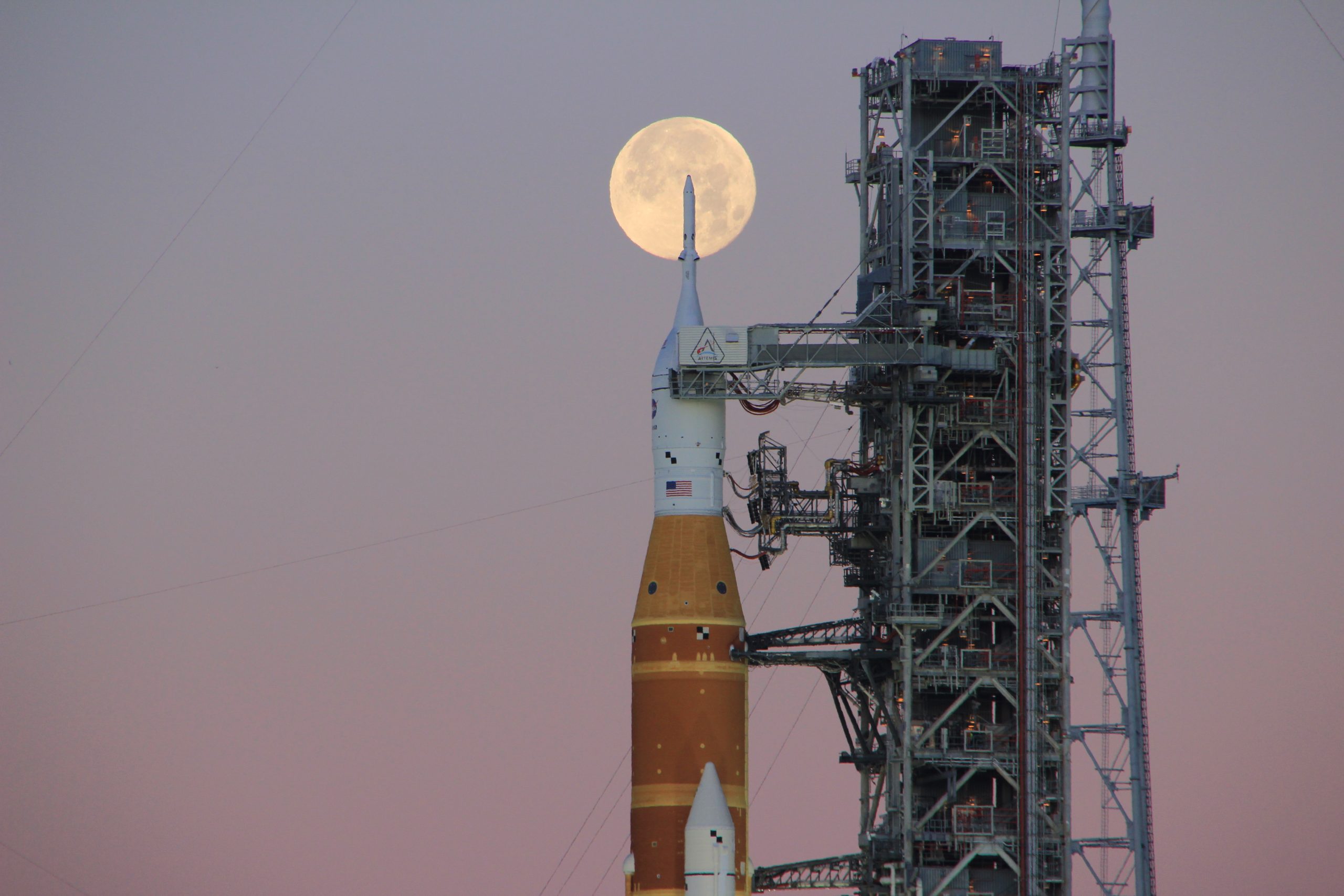
Long-term strategyAirbus Netherlands is supplying the solar panels for all six Artemis moon missions announced to date. Development started as early as 2012. Ten years later, in November 2022, the first units went into space with the unmanned test flight Artemis I. The wings of Artemis II, which are now folded inside the SLS rocket on the launch pad in Florida, were built starting in 2017 and delivered to NASA in 2021.
The fact that Airbus Netherlands can participate in such a high-profile program as Artemis is because the Netherlands has been investing in specific knowledge, experience, and technology for more than fifty years, says Rob van Hassel, solar panel specialist at Airbus Netherlands. This began in the 1970s with solar panels for the first Dutch satellites, ANS and IRAS. Since then, Airbus Netherlands (formerly known as Fokker and subsequently Dutch Space) has supplied solar panels for some 160 different space missions. ‘An enormous track record, which we owe in part to our close collaboration with ESA and the Netherlands Space Agency,’ said Van Hassel.
Never done beforeThe solar panels of the European Service Module are uniquely custom-made for the characteristics of the Artemis moon missions. The fact that these are manned flights is a first complicating factor, explains Van Hassel. Because of this, the panels must meet the strictest possible safety requirements. ‘This is the reason there are four wings with solar panels, instead of the usual two. Even if one wing were to fail completely, the other three would still provide enough energy to complete the moon mission.’
A second complication is the extreme vibrations and noise of the 98-meter-high SLS rocket during launch. The solid-fuel rockets and four large main engines together make more noise than has ever been fired at solar panels from any supplier. ‘Normally, solar panels are very thin to save weight. Those of Artemis, however, are extra thick so that they do not buckle under this heavy load during launch.’
Finally, the flight path of the Artemis missions also presents additional challenges. The solar panels must perform a number of maneuvers. First, at the moment Orion receives a boost to fly into a higher orbit around the Earth. Then, during the translunar injection, the final push from the main engine that sets the spacecraft on course for the moon.
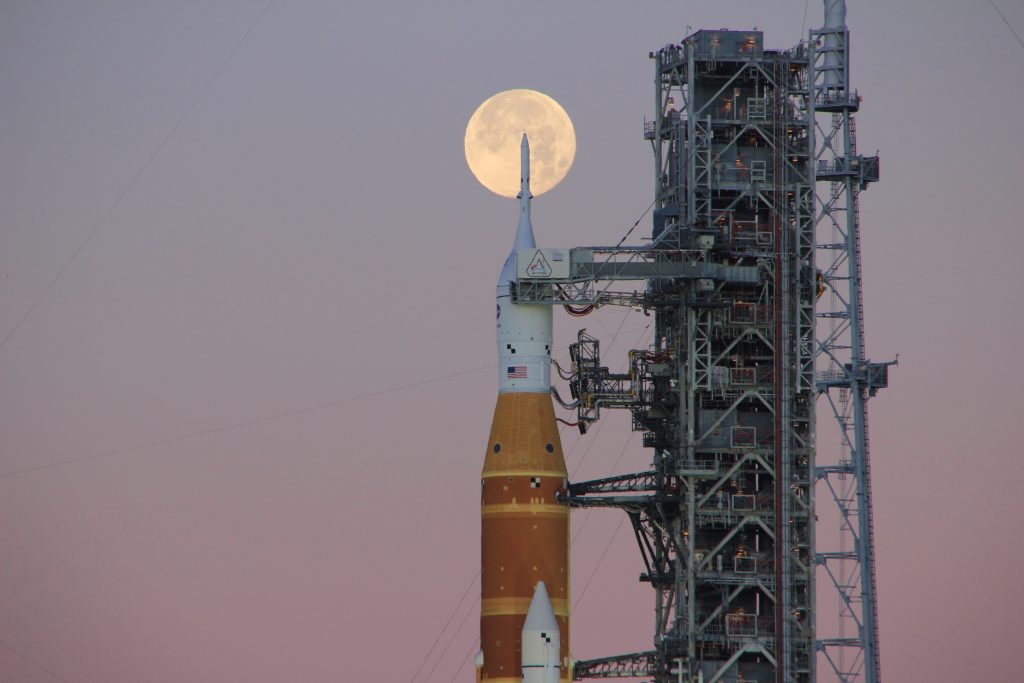
Van Hassel: ‘The solar panels will endure significant shocks. Moreover, during that final push, we want to prevent jet dust from the rocket engines from damaging the panels. That is why they are being flipped forward. But things get tense at lower loads. To ensure that the Orion spacecraft can also be controlled manually, the crew pilot will practice with his joysticks for an hour. It is already established that the vibrations from the solar panels will influence that control. But how and to what extent will be tested for the first time in weightlessness. So it will be exciting to see if the panels react exactly as in our simulations, because such maneuvers have never been performed in space before.’
More informationThe launch of Artemis II is currently scheduled for the night of April 1 to 2 at 00:24 CEST, but may be postponed if circumstances require it. The key moments of the mission – the launch, the flight around the moon, and the landing – can be followed via NASA TV.

