Tài Liệu Học Tập
No Result
View All Result
  • Đề Thi
  • Lớp 12
    • Lịch Sử Lớp 12
    • Địa Lí Lớp 12
    • Ngữ Văn Lớp 12
    • GD KTPL Lớp 12
    • Toán Lớp 12
    • Tiếng Anh Lớp 12
    • Hóa Học Lớp 12
    • Sinh Học Lớp 12
    • Vật Lí Lớp 12
  • Lớp 11
    • Toán Lớp 11
    • Ngữ Văn Lớp 11
    • Tiếng Anh Lớp 11
    • Hóa Học Lớp 11
    • Sinh Học Lớp 11
    • Vật Lí Lớp 11
    • Lịch Sử Lớp 11
    • Địa Lí Lớp 11
    • GDCD Lớp 11
  • Lớp 10
    • Toán Lớp 10
    • Ngữ Văn Lớp 10
    • Tiếng Anh Lớp 10
    • Hóa Học Lớp 10
    • Sinh Học Lớp 10
    • Vật Lí Lớp 10
    • Lịch Sử Lớp 10
    • Địa Lí Lớp 10
    • GDKTPL Lớp 10
    • Công nghệ lớp 10
    • Tin Học Lớp 10
  • Lớp 9
    • Toán Lớp 9
    • Ngữ Văn Lớp 9
    • Tiếng Anh Lớp 9
    • Lịch sử và địa lý lớp 9
    • Khoa Học Tự Nhiên Lớp 9
    • GDCD Lớp 9
  • Lớp 8
    • Toán Lớp 8
    • Ngữ Văn Lớp 8
    • Tiếng Anh Lớp 8
    • Lịch sử và địa lý lớp 8
    • Khoa Học Tự Nhiên Lớp 8
    • GDCD 8
  • Lớp 7
    • Toán Lớp 7
    • Văn Lớp 7
    • Tiếng Anh Lớp 7
    • Lịch Sử Và Địa Lí Lớp 7
    • Khoa Học Tự Nhiên Lớp 7
  • Lớp 6
    • Toán Lớp 6
    • Văn Lớp 6
    • Tiếng Anh lớp 6
    • Lịch Sử và Địa Lí Lớp 6
    • Khoa Học Tự Nhiên lớp 6
  • Lớp 5
    • Toán lớp 5
    • Tiếng Việt Lớp 5
    • Tiếng Anh Lớp 5
    • Lịch Sử và Địa Lí Lớp 5
  • Lớp 4
    • Toán lớp 4
    • Tiếng Việt Lớp 4
    • Tiếng Anh Lớp 4
    • Lịch Sử và Địa Lí Lớp 4
  • Lớp 3
    • Toán lớp 3
    • Tiếng Anh Lớp 3
    • Tiếng Việt Lớp 3
  • Mẹo Hay
  • Tin tức
  • Liên Hệ
Tài Liệu Học Tập
No Result
View All Result
Home Văn học

Bromination of alkenes with Br2 to give dibromides

by Tranducdoan
14/04/2026
in Văn học
0
Đánh giá bài viết

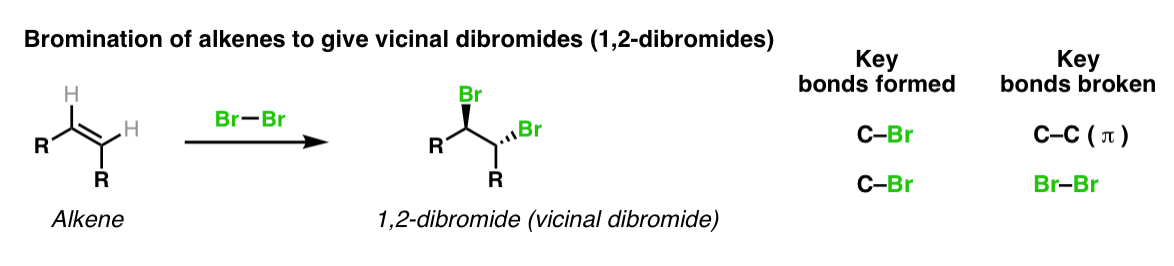
1-bromination of alkenes with br2.gif

Description: Treatment of alkenes with bromine (Br2) gives vicinal dibromides (1,2-dibromides).

Notes: The bromines add to opposite faces of the double bond (“anti addition”). Sometimes the solvent is mentioned in this reaction – a common solvent is carbon tetrachloride (CCl4). CCl4 actually has no effect on the reaction, it’s just to distinguish this from the reaction where the solvent is H2O, in which case a bromohydrin is formed (see also).

Notes: Again note that in the first example CCl4 is merely the solvent and in these cases has no effect on the reaction (unlike when water or alcohols are the solvent – see bromohydrin formation page). Sometimes “dark” is mentioned to distinguish this reaction from cases where Br2 can promote bromination through a radical pathway.

Mechanism:

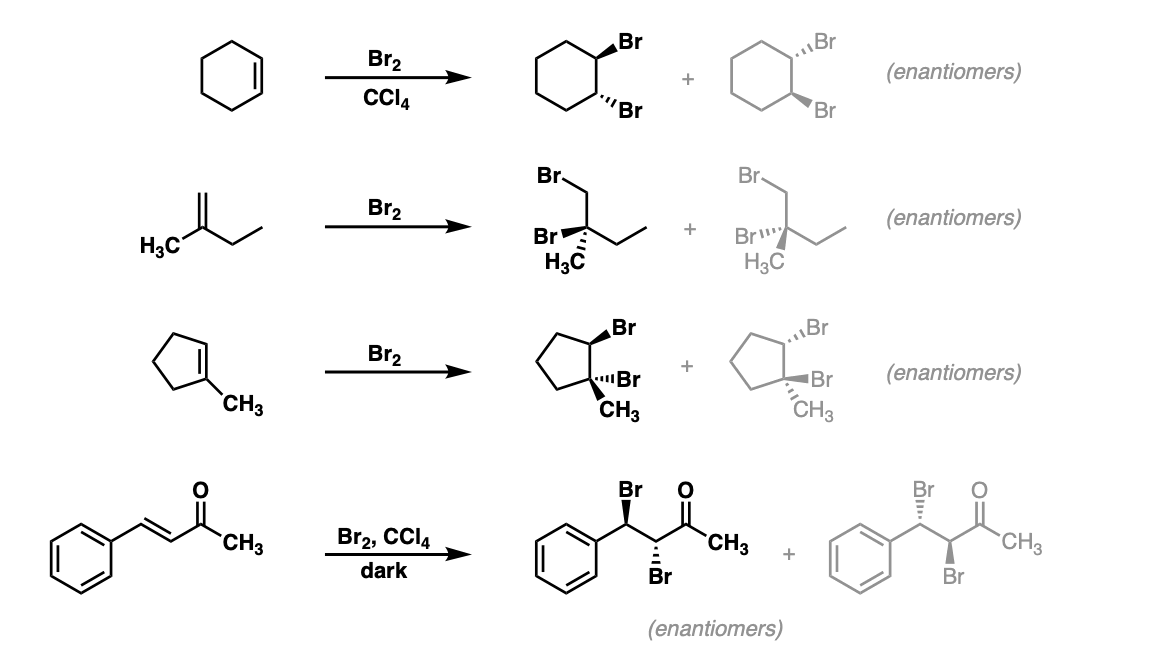
Attack of the alkene on bromine (Step 1, arrows A and B) gives the bromonium ion, which is attacked at the backside by bromide ion to give the trans-dibromo product. Note that the bromines are delivered to opposite sides of the alkene (“anti” addition).
bromination of alkenes with br2 showing formation of bromonium ion intermediate then attack by bromide ion and formation of trans dibromide

Notes: Note that a 1:1 mixture of enantiomers will be formed in this reaction. The enantiomer formed will depend on which face of the alkene the bromine adds to.

Additional examples:
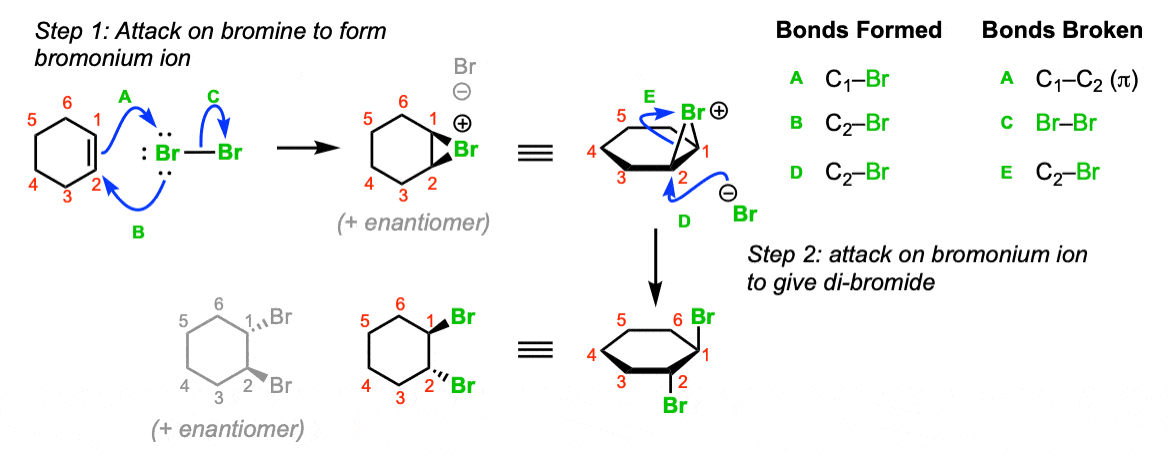
example with diastereomers bromination of alkenes

These examples show what happens when a chiral center is already present on the molecule; a mixture of diastereomers is obtained. The bottom example looks complicated, but actually isn’t – we’re still just breaking C-C, and forming two C-Br bonds, just as with any other alkene. Try not to get freaked out by all the additional atoms in the molecule! (There are chiral centers in the starting material, so again we’re forming a mixture of diastereomers).

Quiz Yourself!

Exam-Type Examples

(Advanced) References and Further Reading:

  1. First example The Halogenation of Ethylenes Irving Roberts and George E. Kimball Journal of the American Chemical Society 1937 59 (5), 947-948 DOI:10.1021/ja01284a507 One of the earliest descriptions in the literature of a three-membered bromonium ion, accounting for the anti stereochemistry of this reaction.
  2. Mechanistic studies The question of reversible formation of bromonium ions during the course of electrophilic bromination of olefins. 2. The crystal and molecular structure of the bromonium ion of adamantylideneadamantane Slebocka-Tilk, R. G. Ball, and R. Stan Brown Journal of the American Chemical Society 1985 107 (15), 4504-4508 DOI: 10.1021/ja00301a021 This paper describes the crystal structure of an isolated, stable bromonium ion. This is significant because it proves the intermediacy of these three-membered cyclic bromonium ions in the electrophilic addition of bromine to alkenes.
  3. Reference To An Experimental Procedure Rufine Akué-Gédu and Benoît Rigo Org. Synth. 2005, 82, 179 DOI: 10.15227/orgsyn.082.0179

Real Life Examples:

Org. Synth. 1932, 12, 26

DOI Link: 10.15227/orgsyn.012.0026

Org. Synth. 1938, 18, 17

DOI Link: 10.15227/orgsyn.018.0017

Org. Synth. 1932, 12, 36

DOI Link: 10.15227/orgsyn.012.0036

Org. Synth. 1947, 27, 5

DOI Link: 10.15227/orgsyn.027.0005

Org. Synth. 1955, 35, 43

DOI Link: 10.15227/orgsyn.035.0043

Org. Synth. 1957, 37, 77

DOI Link: 10.15227/orgsyn.037.0077

Org. Synth. 1952, 32, 104

DOI Link: 10.15227/orgsyn.032.0104

Org. Synth. 1952, 32, 104

DOI Link: 10.15227/orgsyn.032.0104

Org. Synth. 1952, 32, 104

DOI Link: 10.15227/orgsyn.032.0104

Previous Post

Đồng chí – Nội dung bài thơ, Hoàn cảnh sáng tác, Dàn ý phân tích tác phẩm

Next Post

Lời bài hát Missing You Phương Ly x TINLE

Tranducdoan

Tranducdoan

Trần Đức Đoàn sinh năm 1999, anh chàng đẹp trai đến từ Thái Bình. Hiện đang theo học và làm việc tại trường cao đẳng FPT Polytechnic

Next Post

Lời bài hát Missing You Phương Ly x TINLE

đọc sách online cm88 Ca Khia TV trực tiếp XoilacTV Socolive trực tiếp jbo Nhà cái M88 Mansion Xoilac fly88 https://p789bet.biz/ fly88 cm88 com 789bet ww88 sumclub
Tài Liệu Học Tập

Copyright © 2022 Tài Liệu Học Tập.

Chuyên Mục

  • Đề Thi
  • Lớp 12
  • Lớp 11
  • Lớp 10
  • Lớp 9
  • Lớp 8
  • Lớp 7
  • Lớp 6
  • Lớp 5
  • Lớp 4
  • Lớp 3
  • Mẹo Hay
  • Tin tức
  • Liên Hệ

Tham Gia Group Tài Liệu Học Tập

No Result
View All Result
  • Đề Thi
  • Lớp 12
    • Lịch Sử Lớp 12
    • Địa Lí Lớp 12
    • Ngữ Văn Lớp 12
    • GD KTPL Lớp 12
    • Toán Lớp 12
    • Tiếng Anh Lớp 12
    • Hóa Học Lớp 12
    • Sinh Học Lớp 12
    • Vật Lí Lớp 12
  • Lớp 11
    • Toán Lớp 11
    • Ngữ Văn Lớp 11
    • Tiếng Anh Lớp 11
    • Hóa Học Lớp 11
    • Sinh Học Lớp 11
    • Vật Lí Lớp 11
    • Lịch Sử Lớp 11
    • Địa Lí Lớp 11
    • GDCD Lớp 11
  • Lớp 10
    • Toán Lớp 10
    • Ngữ Văn Lớp 10
    • Tiếng Anh Lớp 10
    • Hóa Học Lớp 10
    • Sinh Học Lớp 10
    • Vật Lí Lớp 10
    • Lịch Sử Lớp 10
    • Địa Lí Lớp 10
    • GDKTPL Lớp 10
    • Công nghệ lớp 10
    • Tin Học Lớp 10
  • Lớp 9
    • Toán Lớp 9
    • Ngữ Văn Lớp 9
    • Tiếng Anh Lớp 9
    • Lịch sử và địa lý lớp 9
    • Khoa Học Tự Nhiên Lớp 9
    • GDCD Lớp 9
  • Lớp 8
    • Toán Lớp 8
    • Ngữ Văn Lớp 8
    • Tiếng Anh Lớp 8
    • Lịch sử và địa lý lớp 8
    • Khoa Học Tự Nhiên Lớp 8
    • GDCD 8
  • Lớp 7
    • Toán Lớp 7
    • Văn Lớp 7
    • Tiếng Anh Lớp 7
    • Lịch Sử Và Địa Lí Lớp 7
    • Khoa Học Tự Nhiên Lớp 7
  • Lớp 6
    • Toán Lớp 6
    • Văn Lớp 6
    • Tiếng Anh lớp 6
    • Lịch Sử và Địa Lí Lớp 6
    • Khoa Học Tự Nhiên lớp 6
  • Lớp 5
    • Toán lớp 5
    • Tiếng Việt Lớp 5
    • Tiếng Anh Lớp 5
    • Lịch Sử và Địa Lí Lớp 5
  • Lớp 4
    • Toán lớp 4
    • Tiếng Việt Lớp 4
    • Tiếng Anh Lớp 4
    • Lịch Sử và Địa Lí Lớp 4
  • Lớp 3
    • Toán lớp 3
    • Tiếng Anh Lớp 3
    • Tiếng Việt Lớp 3
  • Mẹo Hay
  • Tin tức
  • Liên Hệ

Copyright © 2022 Tài Liệu Học Tập.